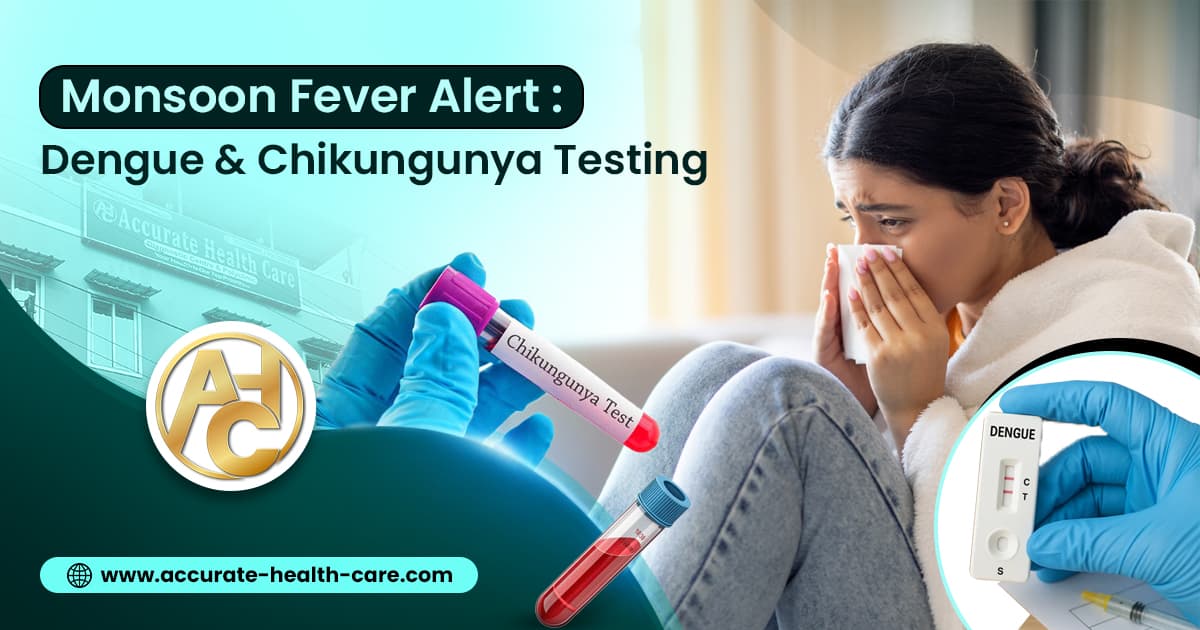
Every year when the rains arrive in Tamluk, so does the spike in fever cases. Most families assume it is a seasonal cold or flu and wait it out at home with paracetamol and rest. Sometimes that is the right call. But during the monsoon months, a fever that does not break within two to three days needs more attention than a tablet and a blanket. At Accurate Health Care, we see a sharp rise in dengue and chikungunya cases every monsoon season and the patients who do best are always the ones who came in early. If someone in your family has been running a fever this season, do not guess — get a dengue test in Tamluk and know for certain.
Recognising the Warning Signs of Dengue and Chikungunya
Both dengue and chikungunya are spread by the Aedes mosquito and both tend to peak during and after heavy rainfall when stagnant water gives mosquitoes the perfect environment to breed. The symptoms overlap in several ways which is why testing is the only reliable way to tell them apart.
Common symptoms to watch for:
Sudden high fever that comes on quickly and does not respond well to basic medication
Severe pain in the joints and muscles, often described as feeling like the bones are aching from inside
A throbbing headache, usually concentrated behind the eyes
Red patches or spots on the skin that show up two to four days into the illness, often starting on the trunk and spreading outward.
Extreme tiredness and weakness that feels disproportionate to the fever
Nausea, loss of appetite or vomiting
Symptoms that need immediate medical attention:
Some signs tell you that the situation has already moved beyond home care. If any of these show up, head to a doctor the same hour:
Bleeding from the nose or gums
Blood in urine or stool
Severe pain in the abdomen
Persistent vomiting that will not settle
Difficulty breathing or a feeling of breathlessness
Sudden drop in energy or loss of consciousness
These are warning signs of severe dengue and they require emergency care, not a home remedy.
When Should You Get Tested for Dengue or Chikungunya
Timing matters with these tests. The NS1 antigen test for dengue is most accurate in the first five days of fever. After that, antibody tests become more relevant. For chikungunya, an IgM antibody test is usually recommended after the fifth day of symptoms.
A good rule to follow is this — if a fever has lasted more than two days during the monsoon season and is accompanied by body pain, headache or a rash, that is your signal to get tested. Every day without a diagnosis is a day the infection spends getting more settled inside the body. The earlier the test, the more options your doctor has.
Why Early Testing Can Protect Your Health
Dengue in particular can turn serious quickly. Platelet counts can drop rapidly and without monitoring, a patient can deteriorate faster than expected. Early NS1 test results in Tamluk give your doctor the information needed to track your platelet levels, manage hydration and decide whether home care is safe or hospitalisation is needed.
Chikungunya rarely becomes life threatening but the joint pain it causes can last weeks or even months if the initial infection is not managed properly. Early diagnosis helps your doctor put the right supportive care in place from the beginning.
Both conditions are manageable when caught early. Both can become complicated when ignored.
Frequently Asked Questions
How soon should I get tested after developing a fever during the monsoon? If your fever has been going on for two days or more and comes with body pain, headache or a rash, get tested without waiting further. For dengue specifically, the NS1 antigen test works best within the first five days of symptoms.
How do I know whether it is dengue or chikungunya causing the fever? Both cause fever and body pain but chikungunya tends to cause much more severe joint pain that can linger for weeks. Dengue is more likely to cause a rash and a drop in platelet count. Only a blood test can confirm which one it is.
Can dengue or chikungunya be treated at home? Mild cases are often managed at home with rest, fluids and fever medication under a doctor's guidance. But this decision should always be made by a doctor after seeing your test results, not based on assumption.
Why is early dengue testing important? Because platelet levels can fall quickly in dengue. Your doctor needs to know what they are dealing with early so they can monitor your condition and act before it reaches a critical stage.
Where can I get reliable dengue and chikungunya testing in Tamluk? Walk into or call Accurate Health Care for accurate dengue test in Tamluk with fast report turnaround so your doctor can begin the right care without any unnecessary delay.
Conclusion
Monsoon fever is common in Tamluk. But common does not mean harmless. A fever that stays beyond two days, especially one that comes with joint pain, rash or severe weakness, deserves a proper test and a doctor's opinion. Do not let the season pass without taking it seriously.
Visit Accurate Health Care for reliable NS1 test in Tamluk and complete monsoon fever diagnostic support.
📍 Find us on Google Maps 📞 Call now to book your test: 7602884451 / 9563093264
📢 Health Updates in One Click! 👉 Join Our WhatsApp Channel Now ✅ Stay Safe | Stay Updated